
Design Research Platform Exploring Ancestral Intelligence Through Global Indigenous Cultures
Design Research Platform Exploring Ancestral Intelligence Through Global Indigenous Cultures
Founder, Designer, Researcher
Founder, Designer, Researcher
https://indigenousgrid.substack.com/?utm_campaign=profile_chips
https://indigenousgrid.substack.com/?utm_campaign=profile_chips
Substack + Instagram + Web (Pattern Library - In Development)
Substack + Instagram + Web (Pattern Library - In Development)
Solo Project
Solo Project
Active
Active
500
500
Substack subscribers following research
Substack subscribers following research
25+
25+
Published essays analyzing cultural design traditions
Published essays analyzing cultural design traditions
Growing
Growing
Community of designers and practitioners
Community of designers and practitioners
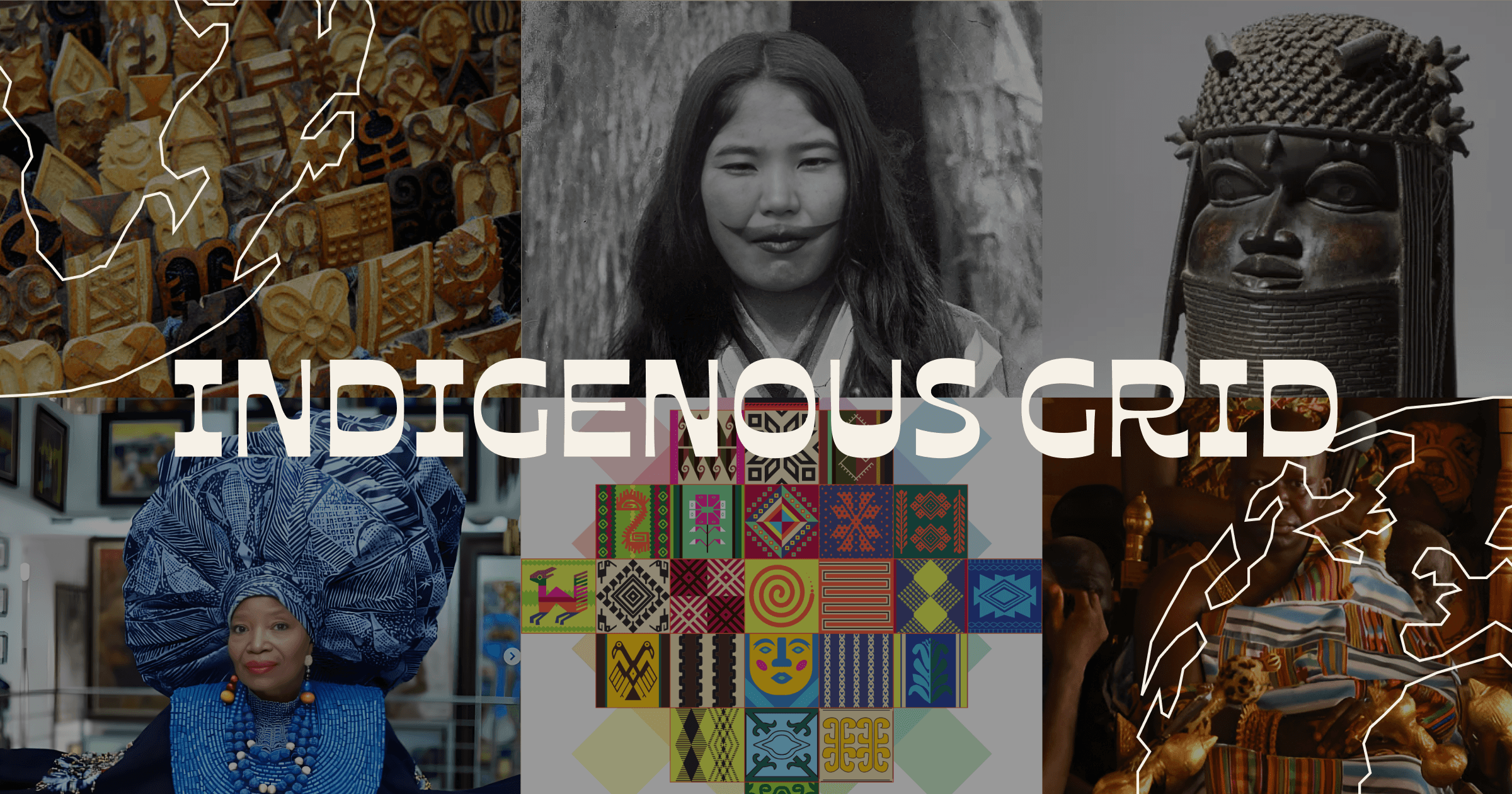
Indigenous Grid is a design research platform I founded to document and analyze design systems across textiles, symbols, architecture, and visual language from global indigenous cultures. Through published essays and visual curation, I explore how ancestral communities structured meaning through design and how this knowledge can inform modern creative practice bridging thousands of years of visual intelligence with contemporary design thinking.
Indigenous Grid is a design research platform I founded to document and analyze design systems across textiles, symbols, architecture, and visual language from global indigenous cultures. Through published essays and visual curation, I explore how ancestral communities structured meaning through design and how this knowledge can inform modern creative practice bridging thousands of years of visual intelligence with contemporary design thinking.
The Challenge
The Challenge
The Problem in Design Education
Modern design education and practice overwhelmingly centers Western design history such Bauhaus, Swiss modernism, American corporate design. This creates significant gaps:
Limited perspective: Designers lack understanding of how the majority of human cultures have approached visual communication
Cultural blind spots: Global products often impose Western design conventions on non-Western users
Missing knowledge: No accessible resource explains non-Western design intelligence in ways that inform contemporary practice
Representation gap: Indigenous and ancestral design systems are relegated to anthropology, not design discourse
The Opportunity
What if designers could learn from thousands of years of visual intelligence developed by indigenous cultures worldwide? How might understanding Adinkra symbols, Yorùbá textiles, Andean cosmology, or Aboriginal dot painting inform more thoughtful, inclusive, and culturally-aware digital design?
My Questions
How do different cultures structure meaning through visual systems?
What design principles can we learn from ancestral traditions?
How can this knowledge inform more inclusive modern design practice?
What's the right way to research and share this knowledge respectfully?
The Problem in Design Education
Modern design education and practice overwhelmingly centers Western design history such Bauhaus, Swiss modernism, American corporate design. This creates significant gaps:
Limited perspective: Designers lack understanding of how the majority of human cultures have approached visual communication
Cultural blind spots: Global products often impose Western design conventions on non-Western users
Missing knowledge: No accessible resource explains non-Western design intelligence in ways that inform contemporary practice
Representation gap: Indigenous and ancestral design systems are relegated to anthropology, not design discourse
The Opportunity
What if designers could learn from thousands of years of visual intelligence developed by indigenous cultures worldwide? How might understanding Adinkra symbols, Yorùbá textiles, Andean cosmology, or Aboriginal dot painting inform more thoughtful, inclusive, and culturally-aware digital design?
My Questions
How do different cultures structure meaning through visual systems?
What design principles can we learn from ancestral traditions?
How can this knowledge inform more inclusive modern design practice?
What's the right way to research and share this knowledge respectfully?
My Approach
My Approach
Building a Research Platform from Scratch
As a product designer, I noticed I was applying the same Western design patterns repeatedly,Material Design, iOS conventions, Figma templates. I wanted to understand design through a broader lens and share what I learned with the design community.
My Research Methodology
1. Deep Cultural Research
For each essay, I conduct thorough research through:
Academic sources: Anthropology journals, art history texts, design history archives
Museum collections: Reviewing documented artifacts, textiles, and cultural objects
Cultural texts: When accessible, studying primary sources and oral traditions
Visual analysis: Examining patterns, symbols, spatial arrangements, material choices
2. Respectful Positioning
I'm very conscious about researching cultures not my own:
Always credit sources and cultural origins
Frame work as "learning from" not "explaining"
Acknowledge what I don't know as an outsider
Focus on design structure, not sacred or private cultural knowledge
When possible, reference indigenous designers' own interpretations
3. Analysis Framework
Each cultural design system is analyzed through:
Structure: How is the design system organized?
Meaning: What does it represent within its cultural context?
Application: How might these principles inform modern design thinking?
4. Accessible Communication
Write in clear, engaging language (not academic jargon)
Use high-quality visual references
Connect ancestral systems to modern design questions
Make it useful for working designers
Building a Research Platform from Scratch
As a product designer, I noticed I was applying the same Western design patterns repeatedly,Material Design, iOS conventions, Figma templates. I wanted to understand design through a broader lens and share what I learned with the design community.
My Research Methodology
1. Deep Cultural Research
For each essay, I conduct thorough research through:
Academic sources: Anthropology journals, art history texts, design history archives
Museum collections: Reviewing documented artifacts, textiles, and cultural objects
Cultural texts: When accessible, studying primary sources and oral traditions
Visual analysis: Examining patterns, symbols, spatial arrangements, material choices
2. Respectful Positioning
I'm very conscious about researching cultures not my own:
Always credit sources and cultural origins
Frame work as "learning from" not "explaining"
Acknowledge what I don't know as an outsider
Focus on design structure, not sacred or private cultural knowledge
When possible, reference indigenous designers' own interpretations
3. Analysis Framework
Each cultural design system is analyzed through:
Structure: How is the design system organized?
Meaning: What does it represent within its cultural context?
Application: How might these principles inform modern design thinking?
4. Accessible Communication
Write in clear, engaging language (not academic jargon)
Use high-quality visual references
Connect ancestral systems to modern design questions
Make it useful for working designers
Research & Content Production
Research & Content Production
What I Do
Publish in-depth design analysis (2,000-4,000 words) examining cultural design systems, pattern logic, and visual languages.
Example Topics
Adinkra symbols (Akan people, Ghana): How geometric primitives create complete symbolic language
Bambara mud cloth (Mali): How material constraints shape design systems
Yorùbá textiles (Nigeria): How pattern and color communicate identity and meaning
Skills Demonstrated
Research: Secondary research, synthesis, visual analysis
Writing: Clear communication of complex ideas
Design thinking: Analyzing how systems structure meaning
Consistency: 14+ essays published on schedule
Relevance to Product Design
Understanding how cultures structure visual meaning informs:
Design systems thinking (consistency, hierarchy, meaning)
Inclusive design (avoiding Western-only conventions)
Global product strategy (cultural awareness)
User research (understanding diverse perspectives)
What I Do
Publish in-depth design analysis (2,000-4,000 words) examining cultural design systems, pattern logic, and visual languages.
Example Topics
Adinkra symbols (Akan people, Ghana): How geometric primitives create complete symbolic language
Bambara mud cloth (Mali): How material constraints shape design systems
Yorùbá textiles (Nigeria): How pattern and color communicate identity and meaning
Skills Demonstrated
Research: Secondary research, synthesis, visual analysis
Writing: Clear communication of complex ideas
Design thinking: Analyzing how systems structure meaning
Consistency: 14+ essays published on schedule
Relevance to Product Design
Understanding how cultures structure visual meaning informs:
Design systems thinking (consistency, hierarchy, meaning)
Inclusive design (avoiding Western-only conventions)
Global product strategy (cultural awareness)
User research (understanding diverse perspectives)

Audience Building & Content Strategy
Audience Building & Content Strategy
Multi-Platform Strategy
Substack: Long-form research for subscribers
Instagram: Visual curation for broader discovery
Cross-promotion: Instagram drives traffic to Substack
Content Types
Pattern close-ups showing structure and geometry
Historical context with contemporary applications
Comparative analysis across cultures
Designer spotlights (contemporary indigenous designers)
Growth Strategy
Consistent publishing schedule (builds trust)
SEO-optimized titles and content (organic discovery)
Visual-first approach (designers are visual learners)
Community engagement (comments, DMs, shares)
Skills Demonstrated
Content strategy: Multi-platform approach
Audience building: Organic growth (no paid ads)
Visual communication: Curating and presenting complex information
Consistency: Sustained publishing over 6+ months
Relevance to Product Design
Content strategy skills transfer to:
Design documentation (making complex systems clear)
Stakeholder communication (explaining design decisions)
User education (onboarding, help content)
Building design culture (evangelizing design thinking)
Multi-Platform Strategy
Substack: Long-form research for subscribers
Instagram: Visual curation for broader discovery
Cross-promotion: Instagram drives traffic to Substack
Content Types
Pattern close-ups showing structure and geometry
Historical context with contemporary applications
Comparative analysis across cultures
Designer spotlights (contemporary indigenous designers)
Growth Strategy
Consistent publishing schedule (builds trust)
SEO-optimized titles and content (organic discovery)
Visual-first approach (designers are visual learners)
Community engagement (comments, DMs, shares)
Skills Demonstrated
Content strategy: Multi-platform approach
Audience building: Organic growth (no paid ads)
Visual communication: Curating and presenting complex information
Consistency: Sustained publishing over 6+ months
Relevance to Product Design
Content strategy skills transfer to:
Design documentation (making complex systems clear)
Stakeholder communication (explaining design decisions)
User education (onboarding, help content)
Building design culture (evangelizing design thinking)
Pattern Library (In Development)
Pattern Library (In Development)
What I'm Building
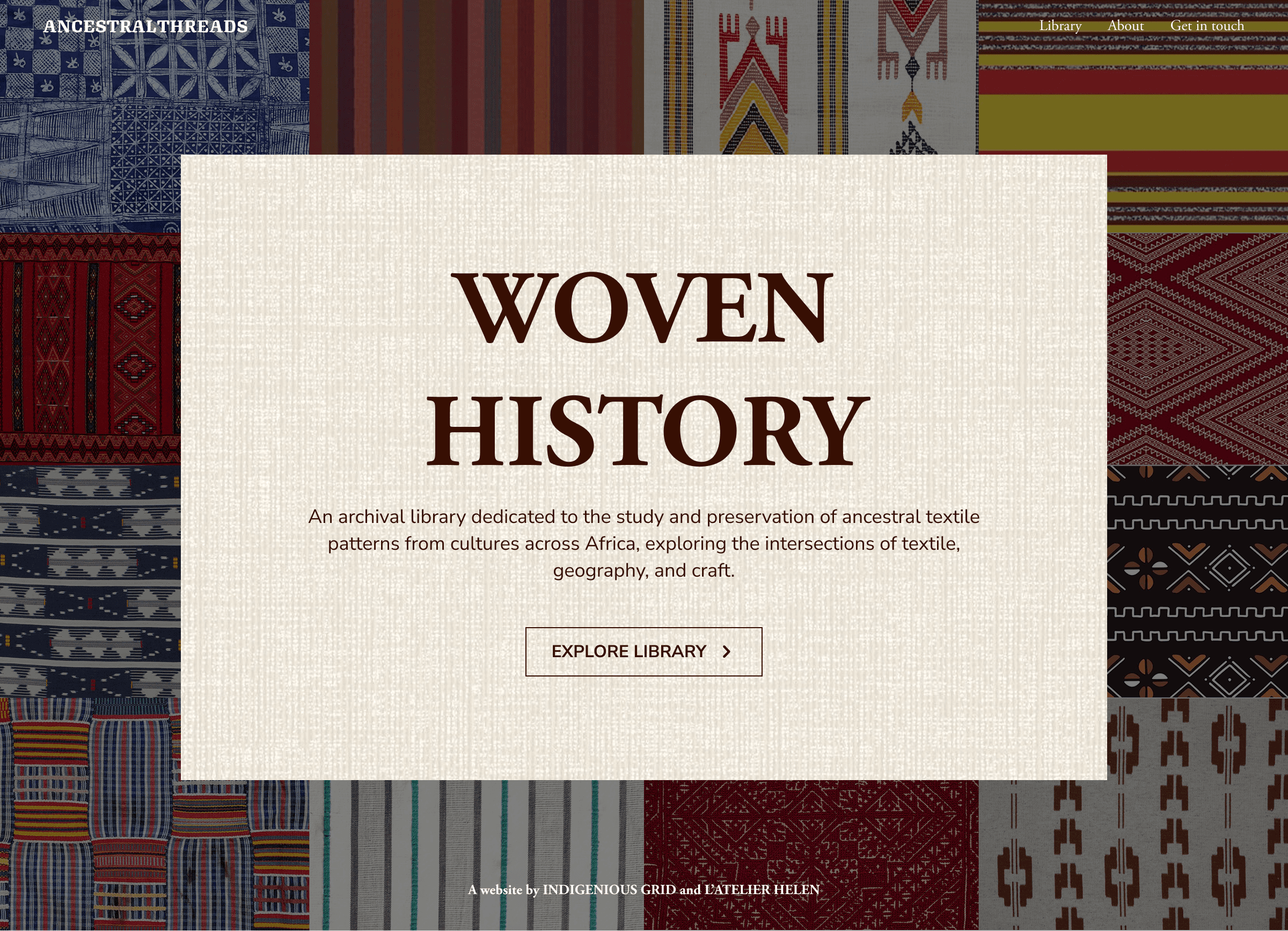
Web-based library documenting pattern structures from global textile traditions—making ancestral design intelligence accessible for modern designers.
Planned Features
Searchable database categorized by culture, technique, symbolism
Visual documentation showing pattern structure
Design analysis (geometric principles, color systems)
Proper attribution and cultural context
Skills Demonstrated
Product thinking: Identifying user need (designers need accessible cultural reference)
Information architecture: Organizing complex content
Design systems: Creating scalable component structure
Technical execution: Building with HTML, CSS, JavaScript
Relevance to Product Design
This project demonstrates:
End-to-end product thinking (problem → solution → execution)
Building for real user needs (designer audience)
Technical skills (I design and build it myself)
Systems thinking (scalable database structure)
What I'm Building
Web-based library documenting pattern structures from global textile traditions—making ancestral design intelligence accessible for modern designers.
Planned Features
Searchable database categorized by culture, technique, symbolism
Visual documentation showing pattern structure
Design analysis (geometric principles, color systems)
Proper attribution and cultural context
Skills Demonstrated
Product thinking: Identifying user need (designers need accessible cultural reference)
Information architecture: Organizing complex content
Design systems: Creating scalable component structure
Technical execution: Building with HTML, CSS, JavaScript
Relevance to Product Design
This project demonstrates:
End-to-end product thinking (problem → solution → execution)
Building for real user needs (designer audience)
Technical skills (I design and build it myself)
Systems thinking (scalable database structure)

Results
Results
Quantitative Metrics
21 Substack subscribers
14+ published essays
Engaged Instagram community of designers, artists, educators, cultural practitioners
Growing reference library cited by design students in portfolios and research papers
Personal Growth
Research skills: Learned to conduct respectful cultural research and synthesize complex information
Writing skills: Developed ability to explain design concepts clearly for broad audiences
Systems thinking: Deepened understanding of how design systems structure meaning
Cultural awareness: Better equipped to design for global audiences with sensitivity
Professional Impact
Demonstrates thought leadership beyond client work
Shows research and analytical capabilities
Positions me as a designer who thinks deeply about inclusive design
Creates conversation starters in interviews
Quantitative Metrics
21 Substack subscribers
14+ published essays
Engaged Instagram community of designers, artists, educators, cultural practitioners
Growing reference library cited by design students in portfolios and research papers
Personal Growth
Research skills: Learned to conduct respectful cultural research and synthesize complex information
Writing skills: Developed ability to explain design concepts clearly for broad audiences
Systems thinking: Deepened understanding of how design systems structure meaning
Cultural awareness: Better equipped to design for global audiences with sensitivity
Professional Impact
Demonstrates thought leadership beyond client work
Shows research and analytical capabilities
Positions me as a designer who thinks deeply about inclusive design
Creates conversation starters in interviews
What I Learned
What I Learned
1. Design history is incomplete without global perspectives
Western design education teaches Bauhaus, Swiss modernism, American corporate design. But Adinkra symbols, Navajo weaving, and Chinese calligraphy are equally sophisticated design systems with millennia of development. Expanding my reference points made me a more thoughtful designer.
2. Cultural research requires humility and care
I'm researching cultures not my own. I've learned to acknowledge my outsider perspective, credit sources meticulously, avoid appropriation (learning from ≠ taking from), focus on design structure not sacred knowledge, and amplify indigenous designers' own voices.
3. Building in public creates accountability
Publishing regularly forced me to do rigorous research (people call out inaccuracies), write clearly (audience includes non-designers), stay consistent (subscribers expect content), and improve continuously (each essay is better than the last).
4. Understanding diverse design systems informs better product work
Studying how cultures create visual languages made me better at building design systems. Understanding color symbolism across cultures helps me design for global audiences. Research methodology transfers to user research. Strategic thinking improves product decisions.
1. Design history is incomplete without global perspectives
Western design education teaches Bauhaus, Swiss modernism, American corporate design. But Adinkra symbols, Navajo weaving, and Chinese calligraphy are equally sophisticated design systems with millennia of development. Expanding my reference points made me a more thoughtful designer.
2. Cultural research requires humility and care
I'm researching cultures not my own. I've learned to acknowledge my outsider perspective, credit sources meticulously, avoid appropriation (learning from ≠ taking from), focus on design structure not sacred knowledge, and amplify indigenous designers' own voices.
3. Building in public creates accountability
Publishing regularly forced me to do rigorous research (people call out inaccuracies), write clearly (audience includes non-designers), stay consistent (subscribers expect content), and improve continuously (each essay is better than the last).
4. Understanding diverse design systems informs better product work
Studying how cultures create visual languages made me better at building design systems. Understanding color symbolism across cultures helps me design for global audiences. Research methodology transfers to user research. Strategic thinking improves product decisions.
Design Research, Cultural Design, Design Systems, Inclusive Design, Visual Design, Content Strategy, Community Building
Design Research, Cultural Design, Design Systems, Inclusive Design, Visual Design, Content Strategy, Community Building

Based in Abuja Nigeria, working remote worldwide
Local time Gmt +1
PRODUCT DESIGN *
USER RESEARCH *
DESIGN SYSTEMS *
CULTURAL DESIGN *
AI WORKFLOWS *
All rights reserved
Designed and developed by Helen Ihediwa © 2025
Based in Abuja Nigeria, working remote worldwide
Local time Gmt +1
PRODUCT DESIGN *
USER RESEARCH *
DESIGN SYSTEMS *
CULTURAL DESIGN *
AI WORKFLOWS *
All rights reserved
Designed and developed by Helen Ihediwa © 2025
Based in Abuja Nigeria, working remote worldwide
Local time Gmt +1
PRODUCT DESIGN *
USER RESEARCH *
DESIGN SYSTEMS *
CULTURAL DESIGN *
AI WORKFLOWS *
All rights reserved
Designed and developed by Helen Ihediwa © 2025